



The President of the Nigerian Institute of Public Relations, Ike Neliaku, has urged public relations practitioners to diagnose communication challenges before designing and deploying strategies to address them.
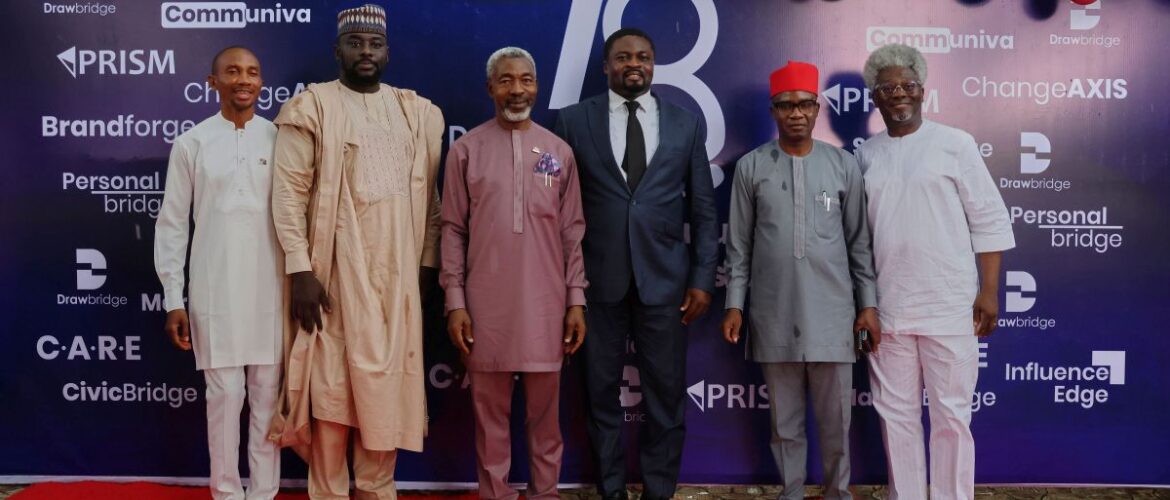
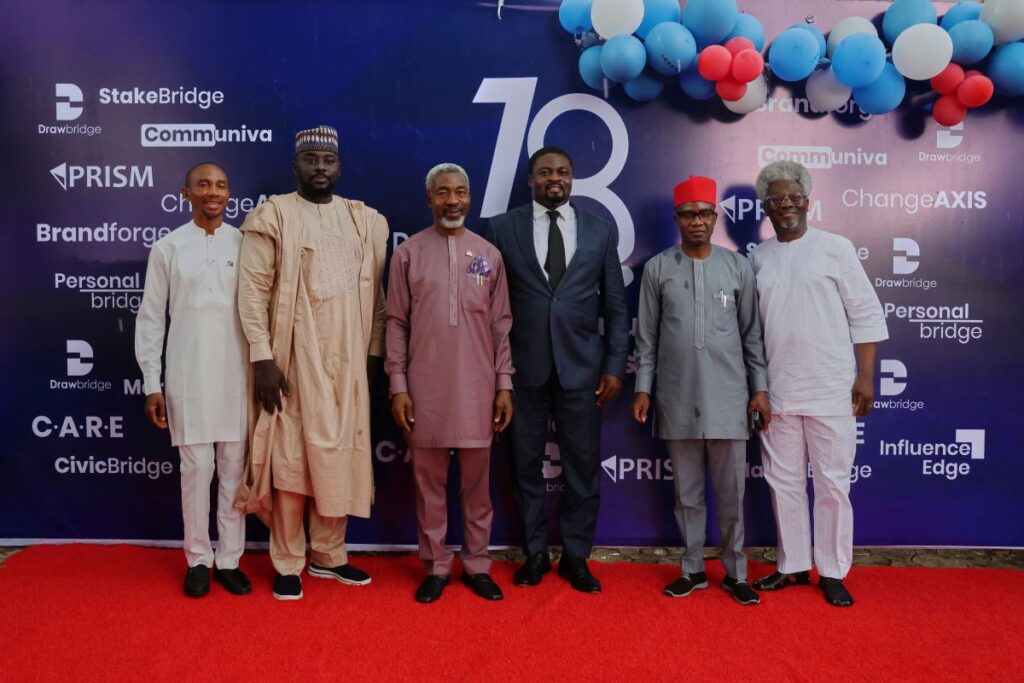
Neliaku spoke at the 18th anniversary celebration of Drawbridge Communication Management, on Saturday where the firm unveiled its new 4D consulting methodology.
He described the methodology as an “entire architecture of public relations”, stressing that communication was only a tool within the broader practice.
Neliaku said, “This is really an entire architecture of public relations, I won’t say communication. Because recently I announced that communication is a tool for public relations. You can’t do anything serious in public relations if you have not diagnosed what it is.
“After you have received the brief, the next thing is to sit with your team and to diagnose what the issues are.
“And then you come to the next strategy, which is design. Translate the raw diagnostic data into a customized structural blueprint.
“And then you do what? You deploy. You roll out the approved blueprint across target channels and then you defend.
“It’s not enough to design. You may have designed, you may have deployed, but expect that there will be feedback. So when you now get the feedback, you have to defend and reinforce.
“So continuously protect the client’s operational momentum and monitor the narrative ecosystem against external volatility.”
The Chief Executive Officer of Drawbridge Communication Management, Hassan Abdul, said the company developed the 4D methodology to address the lack of structure in the way organisations approach communication and public relations challenges.
Abdul said clients often approached agencies with predetermined solutions instead of allowing professionals to first identify and understand the underlying problems.
He said, “Over the past 18 years, we’ve had the privilege of providing solutions for all kinds of clients, public sector, mostly private sector, and then some in the development communication space. And one thing that has always stood out was the confusion and the lack of structure on all sides.
“Clients typically will call you and tell you, oh, come and help us do a campaign. We want you to do X, Y, Z. So the client decides to be both the patient and the prescriber of his own solution. And that totally disregards the professional expertise and competence that you bring. So you’re a strategic counsellor who’s supposed to help them identify their problem and help them design the solution.
“But what we have most of the time is the whole situation flipped around. And that’s why we said, why don’t we start trying to provide some order? Which is, so when you come and you say you have a problem, the first thing we do is we try to do diagnosis.
“So we have a series of tools that we have built that will guide us through that diagnostic stage. We talked about having different products or different frameworks. So the 4D is the methodology.”
Abdul said the framework was also designed to encourage other agencies to develop structured processes that could be understood, replicated and consistently applied.
He added, “In terms of having structured frameworks, that gap has always been there. So this is what this is supposed to help to do. While it is for us, it’s also open to other people to try to model after, so that going forward into the future, agencies can also develop their own structured processes that are easy for clients to see and for everybody to apply and repeat and get the same results.”
The Drawbridge CEO said communication, trust and reputation had become increasingly important to the survival and growth of organisations because of the speed at which information now travels.
“Communication is becoming more central in this day and age to the success of organisations.
“In the past, this was not as critical as it is now. The same thing goes for trust and for reputation. In the past, you could do anything as an organisation and get away with it.
“Today, with the way information travels at the speed of light, all it takes is for one action by an organisation that erodes trust, for that organisation’s entire bottom line to crash.”
Abdul explained that the “defend” phase of the methodology was focused on protecting an organisation’s reputation after a communication strategy had been implemented.
He said, “And so, when you have structures that help organisations to not only properly manage their communication, but also ensure that it is sustainable, which is where the defend phase comes in. The defend phase focuses mostly on ensuring that whatever has been done, you are able to now provide protection that ensures that even if there’s external volatility, it keeps it protected.
“So you do a lot of reputation protection at the end of every communication activity.”
He identified the trust deficit between citizens and government as one of the major challenges facing Nigeria, stressing the need for organisations to regard trust as an asset that must be measured and protected.
“One of the major challenges that we have today as a country is there’s a huge trust deficit between the citizenry and government. What we’re trying to do with this is to build frameworks that help organisations identify trust itself as an asset that they need to build and jealously guard and defend. You cannot guard or manage something you cannot measure.”
Abdul said organisations capable of withstanding external pressures would have better prospects of growth, profitability and contribution to the economy.
“When you have organisations and companies that can withstand those kinds of external pressure, they would have the likely chance of growing.
“And the more they grow and become profitable, the more they can contribute to the economy, the more they can provide employment, the more they can impact society.”
He added, “Trust is becoming a very key determinant of the success of organisations. That’s where we are going to. To build trust between the organisation and all the stakeholders. So our own job is just to engineer”
On artificial intelligence, Abdul dismissed concerns that the technology would take over most public relations jobs, saying AI would instead complement professionals.
He said, “AI is not taking most of our jobs. The issue is there is a disconnect in the understanding of what we do and how we support organisations.
“If I was doing content on an organisation, I would worry. Because AI can generate content faster than I can generate. I’m doing advisory.
“And if you go and rely on AI to give you advice to run your business, the first thing AI will even tell you is that I am AI, I can make mistakes. What we are doing is based on input we will receive from different areas of your ecosystem.
Trust is becoming a very key determinant of the success of organisations. That’s where we are going to.
“So there are things that depend on human relationships, human physical abilities to do, and those things are about 90% of what we do. The part where AI comes in, as I said, is generating ideas and content. AI can come in there and be an assistant, so it augments the work that we do.”